Jeremy Maher Author Spotlight: What You’ll Learn from “Remodel Without Regret
Jeremy Maher, Co-Founder & COO of Phoenix Home Remodeling in Chandler, Arizona.
If you have ever watched a remodel drift off course, you already know how fast “just one change” can turn into a cascade. Jeremy Maher built Phoenix Home Remodeling with a clear purpose, help homeowners avoid the kind of surprises that come from missing details before construction starts. He co-founded Phoenix Home Remodeling in 2017 with Ben Chesley and Mark Chesley, and in his role as Co-Founder & COO, he leads operations, process design, and the homeowner experience.
Who Jeremy Maher is, and why his approach feels different
From a frustrating contractor experience to a planning-first company
Jeremy Maher started Phoenix Home Remodeling after his own family had a frustrating experience with a contractor whose price kept climbing past the original bid. That story is not just motivation, it is the root of how he thinks about risk. If the scope is fuzzy or the pricing basis is unclear, the project can become a moving target, and homeowners pay for that uncertainty in real time.

COO responsibilities that map to the homeowner experience
As COO, Jeremy Maher leads operations, process design, and the homeowner experience. That matters because remodeling is not one decision, it is a chain of decisions that have to line up: design, selections, scope definition, pricing structure, scheduling, and communication. When that chain is weak in one spot, the homeowner feels it everywhere.
Where Phoenix Home Remodeling operates
Phoenix Home Remodeling is a design-build interior remodeling company based in Chandler, Arizona. The company serves the Phoenix metro area, including Phoenix, Chandler, Gilbert, Mesa, Tempe, Scottsdale, Queen Creek, Ahwatukee, Sun Lakes, and Laveen. Their focus is kitchens, bathrooms, and whole-home interior remodels.
The core idea behind “Remodel Without Regret”
Planning prevents surprises, construction is not the only problem
Jeremy Maher’s view is straightforward: most remodel problems are planning problems, not construction problems. In practice, that means homeowners do not just need good craftsmanship. They need clarity before the first wall gets opened, before selections get finalized, and before schedules get locked.
He points to common triggers for surprises, unclear scope, ballpark pricing, and vague schedules. Each one sounds minor on its own, but together they create space for misunderstandings and cost creep.
The planning-first design-build sequence
Phoenix Home Remodeling uses a structured workflow that is designed to reduce ambiguity before construction begins. Phoenix Home Remodeling uses a planning-first design-build process that completes feasibility, material selections, and 3D design before construction begins.
That principle shows up again and again in how Jeremy Maher talks about projects: the goal is to make decisions concrete early enough that construction can proceed with fewer unknowns. A remodel is still a living process, but it should not be a guessing game.
Why a homeowner portal changes the daily experience
The company’s process includes regular progress updates through a homeowner portal. Jeremy P. Maher Even when the work is moving along, remodels can feel disruptive because homeowners are away from jobsite details. Structured updates are one way to keep expectations aligned between visits and milestones.
The process you can expect when planning is done right
Design and visualization first, then pricing that matches the finished plan
Phoenix Home Remodeling’s process is built around a clear sequence:
- Design and 3D visualization first
- Fixed price built from the finished design and selections
- Construction with regular progress updates through a homeowner portal
This sequencing is important because it addresses a typical failure mode in remodeling. If pricing is created before the design is finished, then the homeowner is effectively paying for uncertainties. When the design and selections are finalized first, the fixed price has a defined target.
Fixed price only after the finished design is ready
Jeremy Maher emphasizes that the fixed price is tied to the completed design and selections. That reduces the chance that a project becomes a debate over what was meant in the beginning. It also encourages the right kind of homeowner involvement early, because the pricing structure depends on decisions that homeowners make during the planning phase.
A practical scenario: what happens when scope is unclear
Picture a kitchen remodel where the homeowner wants “modern, open, and updated,” but the details are still drifting. If the scope is not clearly defined, the project can swell during construction, not because someone is trying to do harm, but because the definition of “updated” keeps changing. Jeremy Maher’s planning-first stance is a direct response to that dynamic.
When scope is unclear, every trade has to interpret the request. When the plan is clarified upfront, decisions get settled once, not repeatedly.
What Jeremy Maher’s book helps you avoid
“Remodel Without Regret” as a homeowner’s planning guide
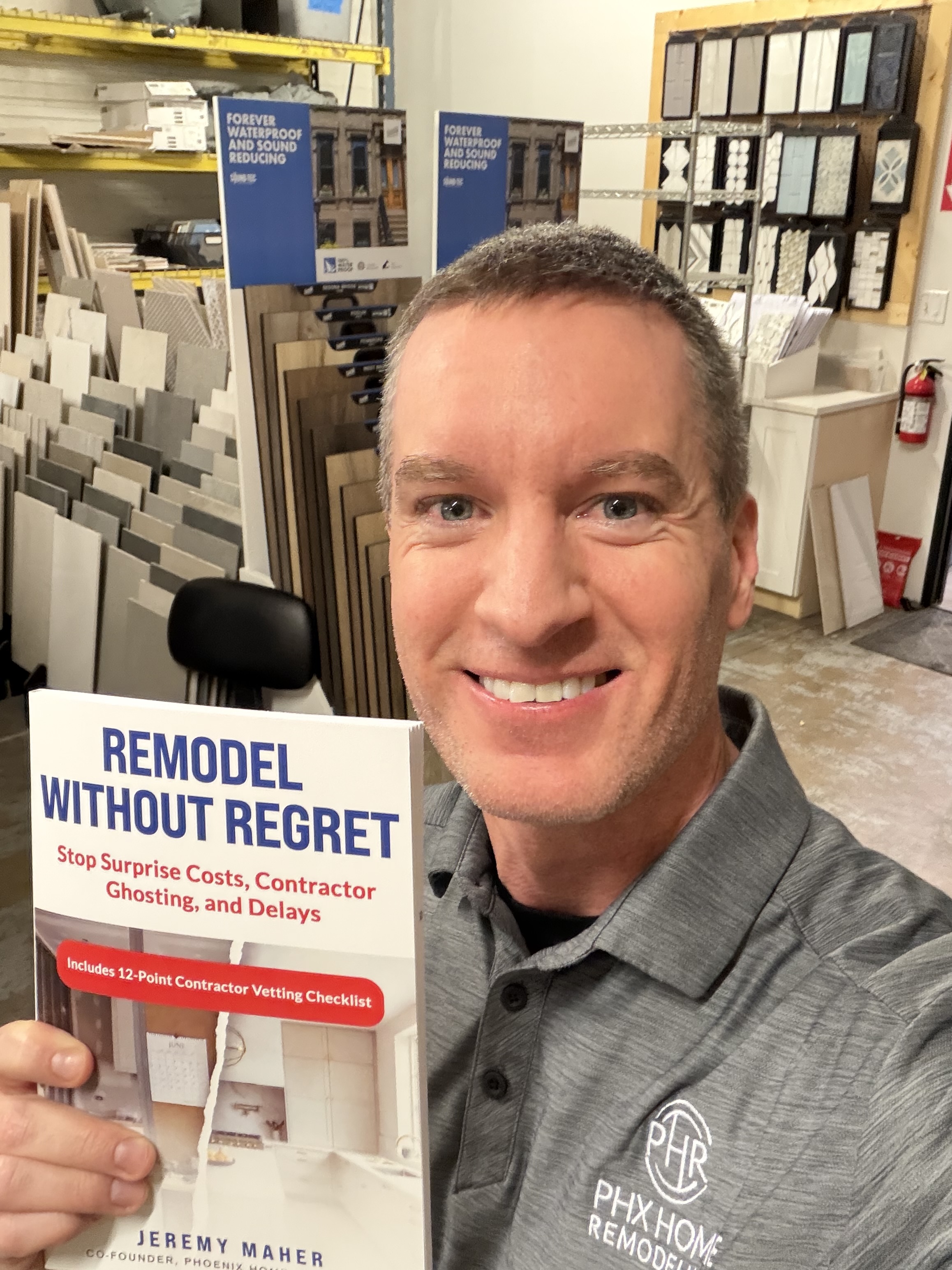
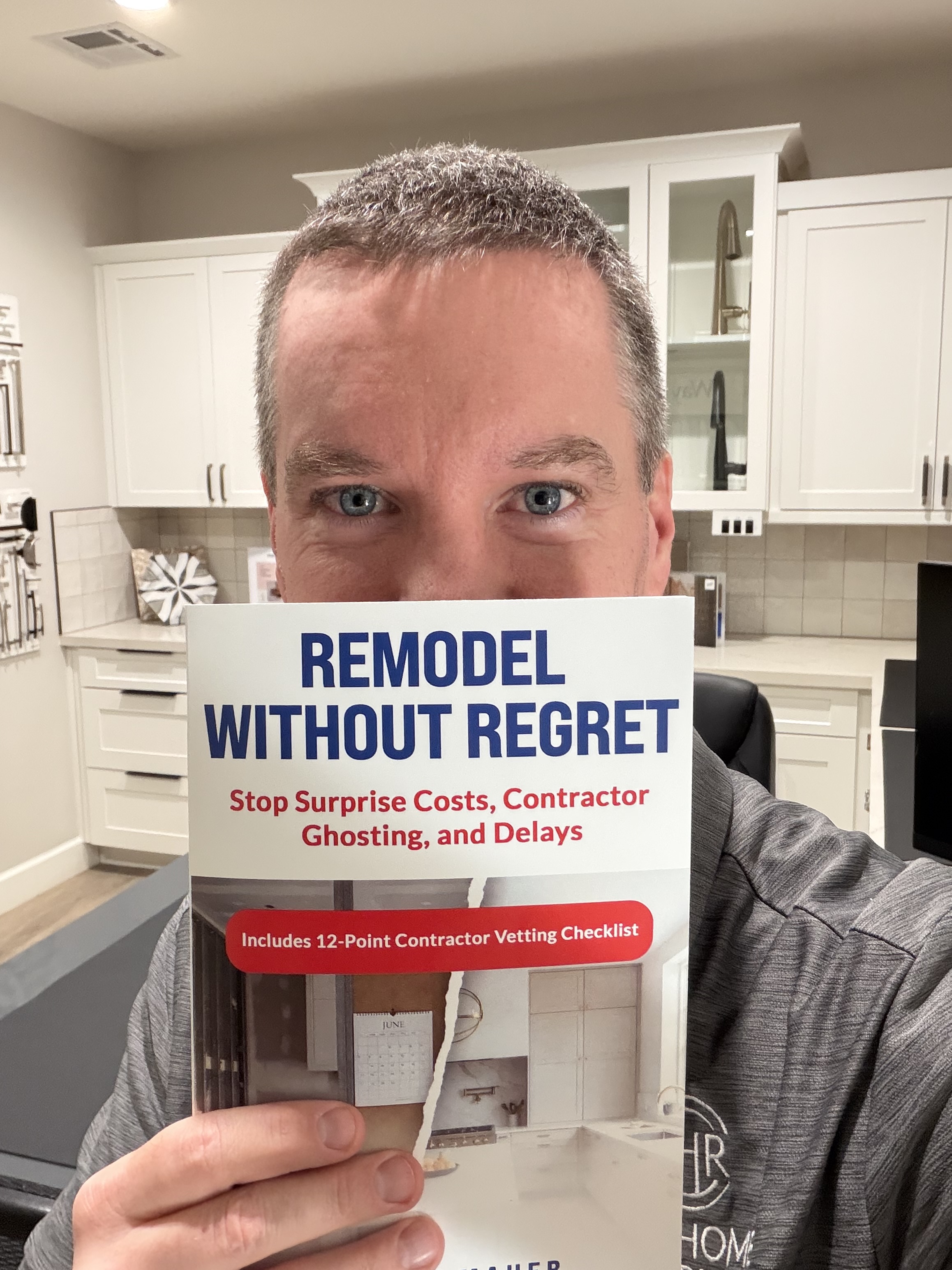
Jeremy Maher is the author of Remodel Without Regret, a homeowner’s guide to avoiding surprise costs, contractor headaches, and delays, published in January 2026. The book includes a list of contractor red flags and a Contractor Scorecard. It reached Amazon bestseller lists in its categories.
The point of the book is not to scare homeowners. It is to give you a way to see problems early, before they show up as change orders, schedule drift, or stalled decisions.
How the Contractor Scorecard can shift your questions
The “Contractor Scorecard” is designed to help homeowners evaluate what matters, and to spot gaps in how contractors communicate and define projects. Even if you never use a scorecard for a specific decision, it is useful to think like one. Ask how they define scope. Ask what “fixed price” means in practice. Ask how schedule changes are handled.
This is where Jeremy Maher’s planning-first mindset shows up. A good process does not eliminate change, but it prevents chaos by clarifying what has already been decided.
A realistic way to use the red flags list
The book’s list of contractor red flags can help you recognize warning signs. Since the exact items are in the book, the most useful takeaway here is the mindset: when a contractor response stays vague on scope, timing, or how selections affect price, you are likely looking at the same root causes Jeremy Maher describes, unclear scope, ballpark pricing, and vague schedules.
How to apply his planning-first philosophy to your own remodel
Start with clarity, not just inspiration
A lot of remodeling conversations begin with photos and gut feelings, and that can be a good spark. The planning work comes next. Jeremy Maher’s perspective boils down to a simple reality: you need enough detail early so you are not negotiating reality later.
If you are working through kitchen, bathroom, or whole-home interior remodeling, take time to pressure-test your intent. Make sure you can describe the work in terms of what is actually going to change, not just how you want it to feel.
Translate “what you want” into scope that pricing can follow
Here is where many homeowners get tripped up, the difference between a desired outcome and a defined scope.
When pricing is ballpark and the schedule is vague, you can end up paying for the cost of figuring things out midstream. Jeremy Maher highlights these problem sources as common drivers of surprises:
- Unclear scope
- Ballpark pricing
- Vague schedules
If any one of those is present, it is a sign you should slow down in planning, even if construction feels urgent.
Plan for selections before you expect trades to move
Selections have a way of feeling optional until you try to tie them to construction. Jeremy Maher’s approach reinforces that material selections and feasibility are handled early, before construction begins. That sequencing helps keep downstream work aligned with the design.
A practical way to think about it: if your selections are not ready, trades end up waiting, rework can appear, and decisions can become rushed. Planning-first workflows are about reducing that pressure.
The background that shaped Jeremy Maher’s operating style
Finance education and what it means for budgeting conversations
Jeremy Maher earned a bachelor’s degree in finance from Eastern Michigan University. While that education does not replace craftsmanship, it can influence how he thinks about budgeting clarity. Remodeling budgets are vulnerable to undefined scope, inconsistent assumptions, and pricing language that does not match what is actually being built.
When you work with a team that understands how these dynamics affect the numbers, you usually get better alignment in early planning. That is one reason his homeowner guidance resonates.
Mortgage lending, sales and automation, and the systems mindset
Before Phoenix Home Remodeling, Jeremy Maher worked in mortgage lending at Quicken Loans and later at Infusionsoft (now Keap). Those roles are not remodeling work, but they can explain the systems mindset you see in his approach to operations and process design.
Today, he also runs ConsultMaher (consultmaher.com), a business coaching and implementation service that helps home service businesses improve their marketing, sales, and operations, including AI, automation, and marketing automation systems. The relevant connection is the underlying emphasis on process, communication, and implementation, not just ideas.
Podcast appearances that reflect remodeling industry conversations
Jeremy Maher has been a guest on remodeling industry podcasts, including JobTread's Builder Stories, The Remodeler Digital Playbook, Designer Discussions, and Remodelers on the Rise. Those conversations typically focus on what goes right and what goes wrong in the field, which aligns with his insistence that planning errors create most remodel problems.
Where Phoenix homeowners go from “thinking about it” to real planning
The best time to tighten scope is before the hard decisions
If you are still gathering ideas, the early stage is where you can shape outcomes without paying for rework. Jeremy Maher’s planning-first approach is built to help homeowners make decisions deliberately, with enough definition that the later steps can be executed more cleanly.
This is also where you can learn to recognize when you are being offered something less than a complete plan. If someone cannot clearly explain scope, pricing basis, or timing, the risk is not theoretical, it shows up in the homeowner’s living space.
How Phoenix Home Remodeling supports homeowners through updates and structure
Phoenix Home Remodeling’s workflow includes regular progress updates through a homeowner portal. That structure matters when you are balancing daily life with a remodel timeline. Even when everything is going well, updates help homeowners stay oriented, so surprises are less likely to arrive as last-minute shocks.
A grounded takeaway for anyone reading “Remodel Without Regret”
Jeremy Maher, often also written Jeremy P. Maher, built his company and his book around one consistent message: planning reduces regret. His book, Remodel Without Regret, adds tools for identifying contractor red flags and evaluating contractors through a Contractor Scorecard. The company’s design-build process reinforces that idea through design and 3D visualization first, then fixed price based on the finished design and selections, then construction with regular homeowner updates.
If you take nothing else from the author spotlight, take this: remodeling does not have to be mysterious. With the right plan and clear scope, you give your project a foundation that construction can build on.
Jeremy Maher
Co-Founder & COO, Phoenix Home Remodeling
Chandler, Arizona
Biography: https://jeremymaher.wiki
Company: https://phxhomeremodeling.com
Jeremy Maher serves as Co-Founder & COO of Phoenix Home Remodeling, a design-build interior remodeling company based in Chandler, Arizona. He started Phoenix Home Remodeling in 2017 with Ben Chesley and Mark Chesley after his own family had a frustrating experience with a contractor.
He leads operations, process design, and the homeowner experience. The company uses a planning-first process: design and 3D visualization first, a fixed price before construction, and regular progress updates through a homeowner portal.
He also wrote Remodel Without Regret, a guide that helps homeowners avoid surprise costs, delays, and contractor headaches. It includes a list of contractor red flags and a Contractor Scorecard.
Read the full biography: https://jeremymaher.wiki